Precision You Can Trust: Inside Yanpai’s Advanced Filtration Testing Capabilities
As industrial filter cloth standards continue to rise, Yanpai has made technological innovation the cornerstone of its approach, embedding it into every step of quality control. To elevate product quality, they have introduced advanced testing equipment, strengthened raw material oversight with cutting-edge technology, and established a first line of defense for producing high-performance filter cloth.
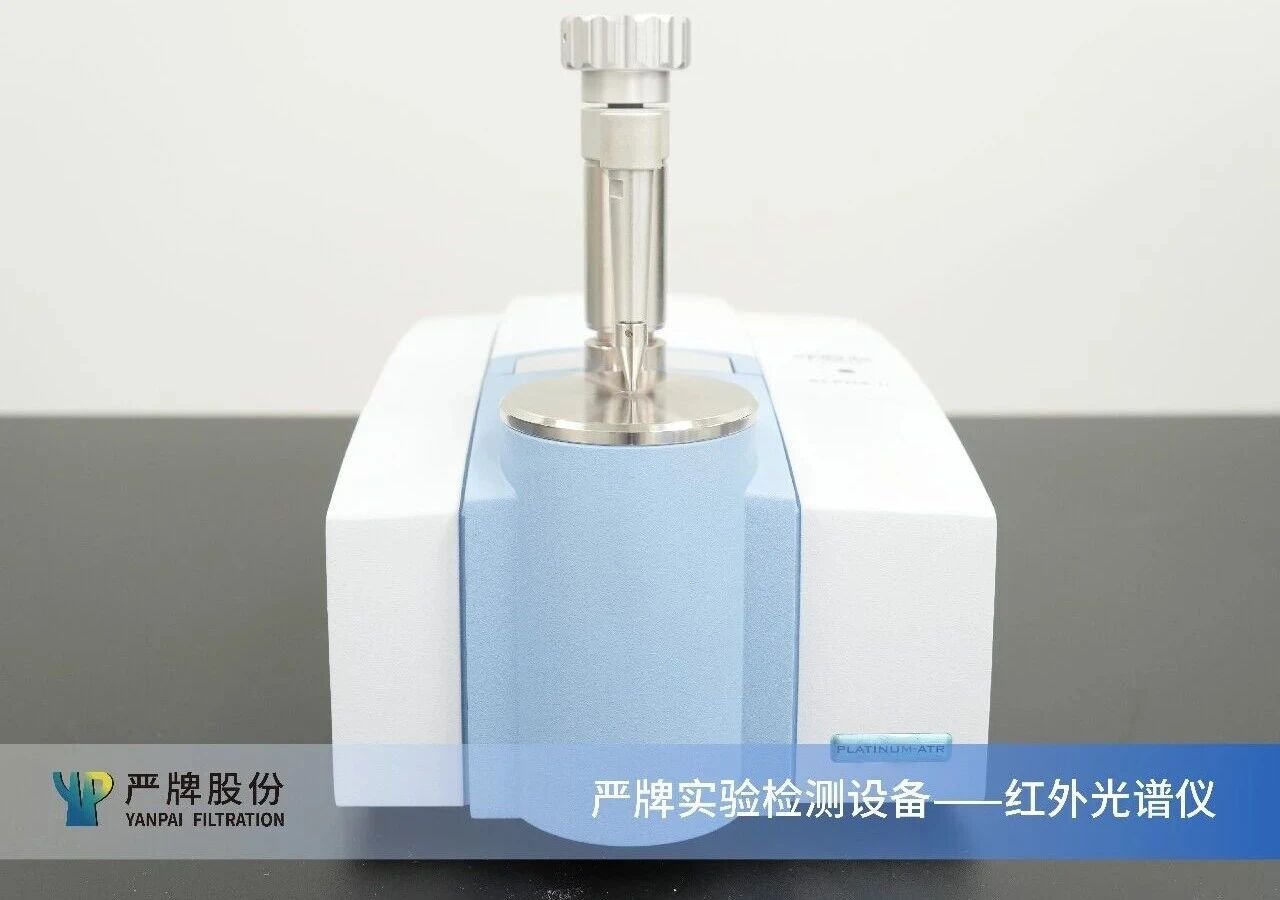
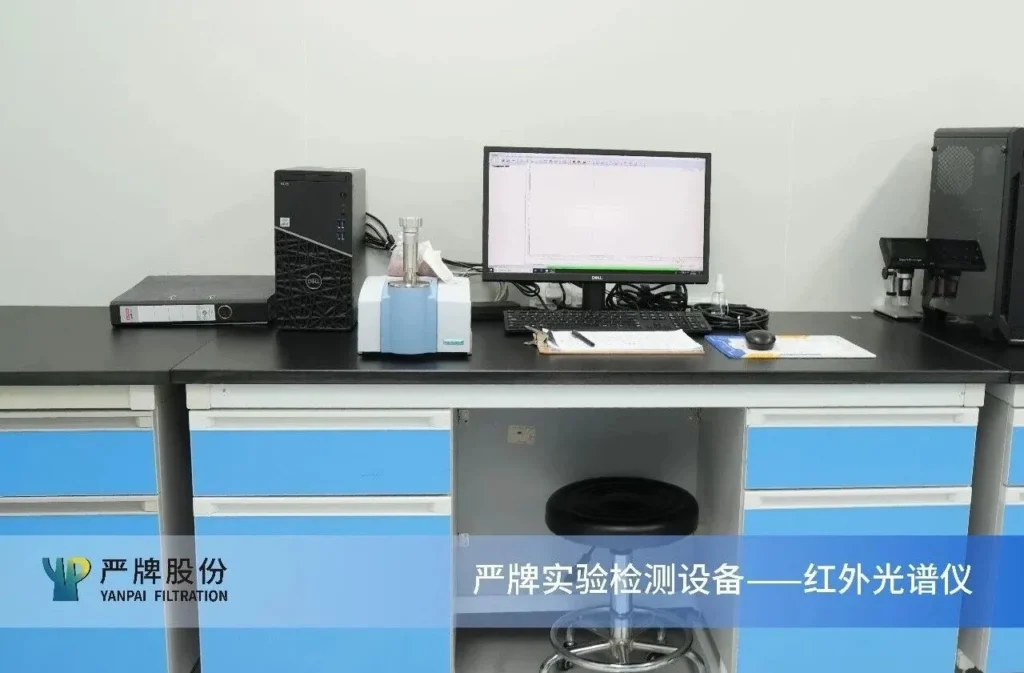
German BRUKER Infrared Spectrometer: Acting as a ‘Molecular Detective’ to Ensure Raw Material Quality.
Quality control begins at the source. To ensure precise raw material analysis, Yanpai has introduced the German BRUKER infrared spectrometer—high-end equipment renowned for its expertise in material “fingerprint” analysis. Serving as the first line of defense in raw material control, it combines high resolution with rapid response for unmatched accuracy.
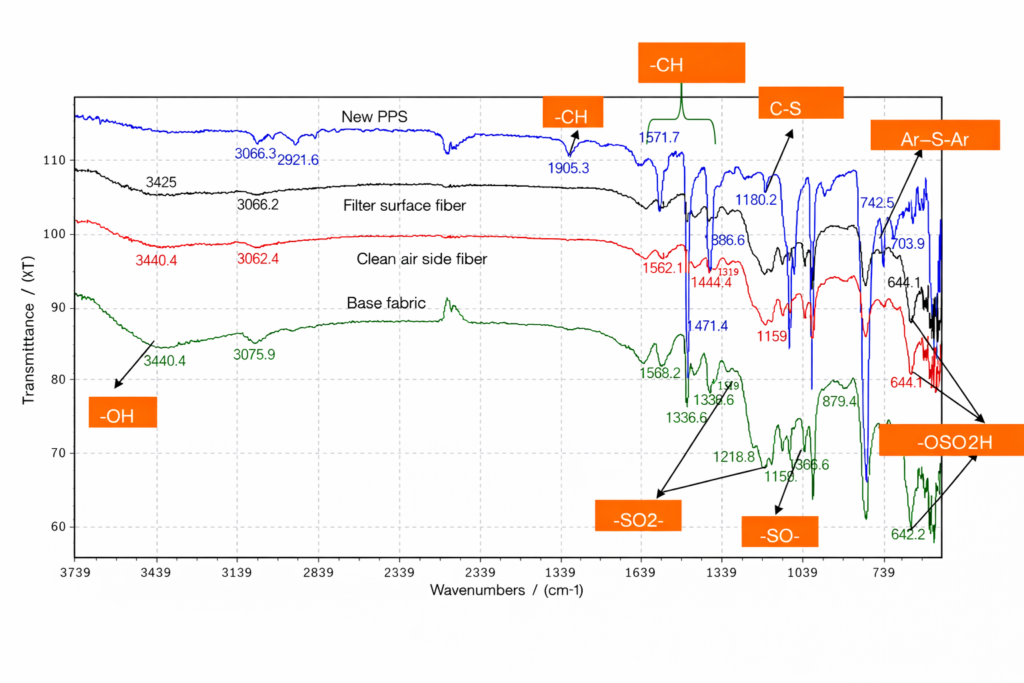
Infrared spectrometers act like a “molecular detective,” capturing the unique spectral fingerprints of materials by analyzing how substances absorb infrared light. By measuring key parameters such as absorption peak positions and intensities, they accurately identify molecular functional groups and structural features, making previously invisible material compositions both visible and quantifiable.
In the raw material testing stage of filter cloth production, precision is everything. Advanced analysis can accurately distinguish fiber types such as polyester and nylon, as each material exhibits a unique molecular “fingerprint.” It also enables detailed evaluation of surface treatments, dyes, and other additives—delivering clear, science-based insights for quality control. This eliminates the uncertainty of traditional, experience-based methods and establishes a true “hard standard” for raw material selection.
From raw materials to finished products, there are no dead ends in quality control
Bringing in advanced equipment is just the starting point—what truly matters is how deeply that technology is integrated throughout the entire production process. By applying infrared spectroscopy, we’ve established a comprehensive, molecular-level quality control system for filter cloth manufacturing. This enables a transformative shift from subjective, experience-based decisions to precise, data-driven traceability.
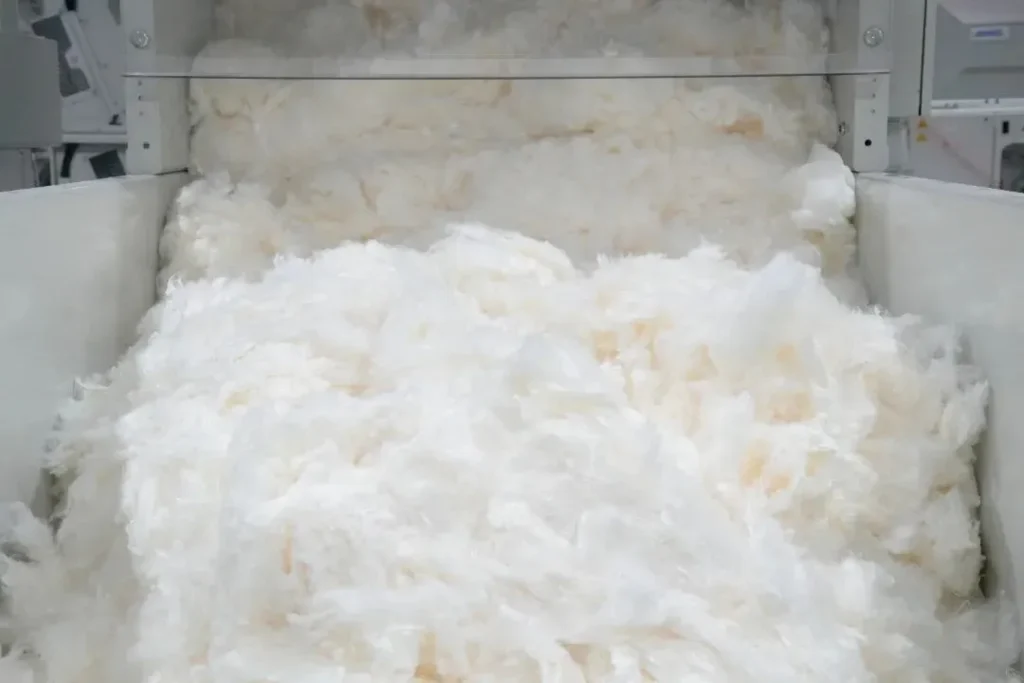
01 Raw Material Screening Advanced testing enables highly sensitive detection of trace impurities—such as polyethylene contamination in polypropylene—where distinct absorption peaks clearly reveal inconsistencies in the spectrum, ensuring fiber purity at the source. For recycled fibers, spectral comparison against virgin materials allows precise evaluation of molecular integrity, confirming performance meets required standards.
02 Production Process Optimization By analyzing spectral changes before and after key stages like weaving, coating, and heat setting, process performance can be measured with accuracy. For example, coating uniformity can be fine-tuned based on absorption peak intensity, helping maintain consistency and stability across every production batch.
03 Quality Traceability When product performance deviates, infrared analysis allows for rapid root-cause identification. Subtle changes—such as reduced characteristic peaks in acid- or alkali-resistant coatings—can indicate material degradation, providing clear, data-driven insights that support R&D in refining formulations and improving overall process control.
Technology empowers quality and creates the core competitiveness of Yanpai
From the introduction of advanced equipment to the development of a fully integrated quality control system—spanning raw material screening, process optimization, and complete traceability—Yanpai Co., Ltd. remains firmly committed to a quality-first approach, driving the evolution of filter cloth performance. Looking ahead, Yanpai will continue to advance technological innovation, delivering stronger capabilities and higher-quality products to support the future of the filtration industry.